



Customizable Backpacks: A 2026 Buyer's Guide to Modular Systems
The phrase "customizable backpack" gets used three different ways and people often mean three different things. Some brands mean a backpack with a name embroidered on it. Some mean color-options at checkout. The interesting kind — and the only one that meaningfully changes how you use the bag — is modularity: a core pack with attachments that clip on and off so one bag handles different jobs.
This guide is about that third kind. We design modular bags for a living, so we have opinions. Below is what to look for, what trade-offs to expect, and where the format actually wins.
What "Modular" Really Means
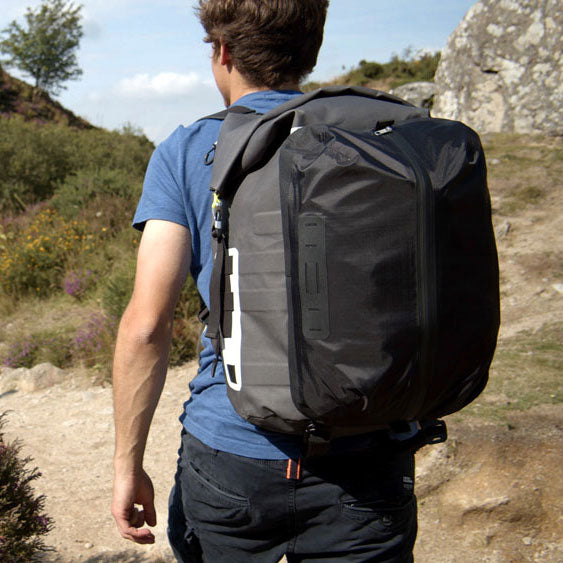
A modular backpack is built around a core compartment with an attachment system on the outside — usually clip points, MOLLE-style loops, or a proprietary connector — that lets you add accessory bags (a wet/dry compartment, a tool roll, a sling for essentials) without rebuying the whole pack.
The benefit is straightforward: one core bag, configured differently for different days. Bring the laptop pocket today, swap to the shoe compartment tomorrow, add a small daypack for travel.
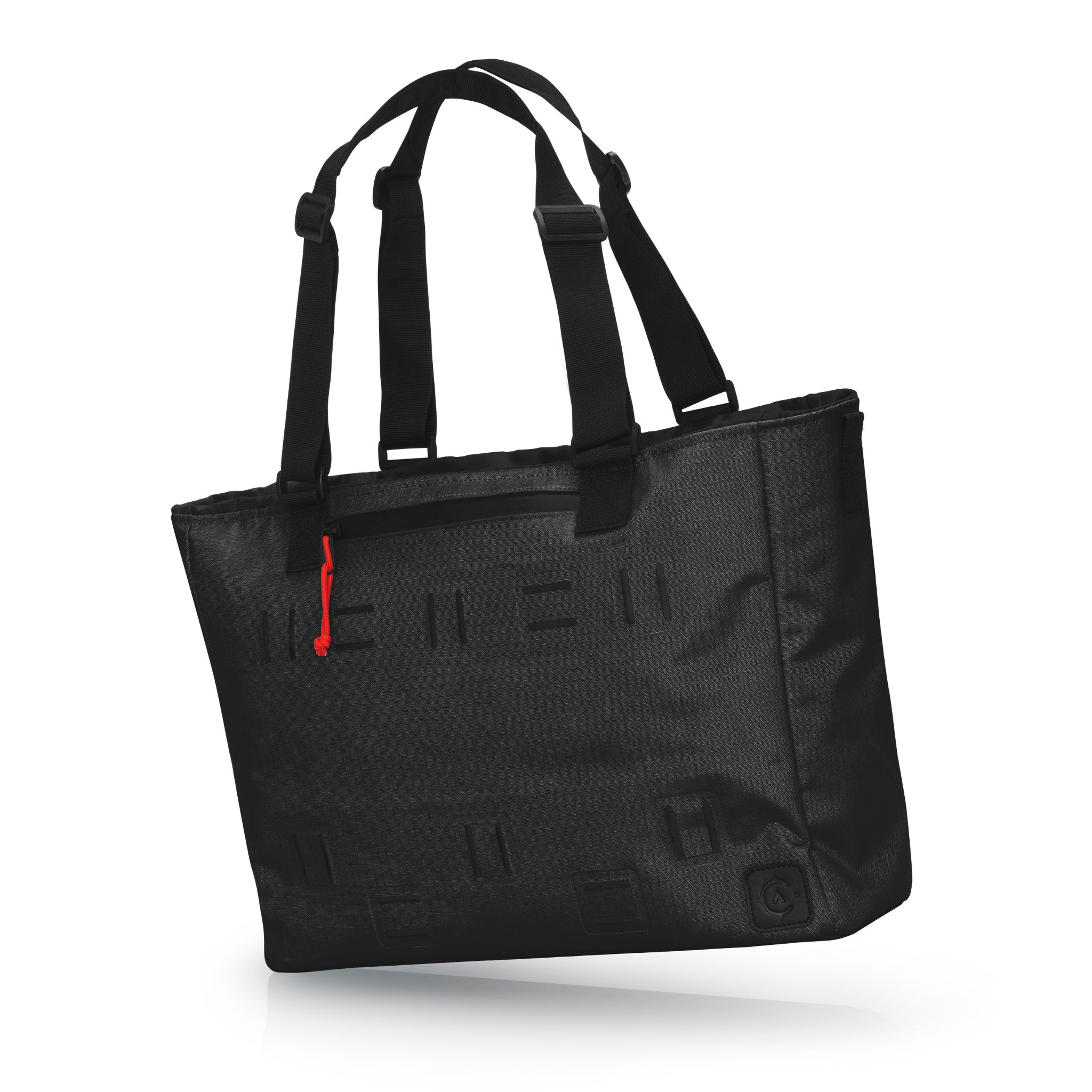
The Cancha approach: the All Court Backpack and Racquet Bag Voyager share a common clip system. Add a Wet-Dry Bag for the gym, a Day Bag XL for work, a Sling Bag for nights out. Buy one core bag, expand as you need.
What to Look For
- A real connector system, not pockets pretending. If the "modular" claim is just elastic loops and a clip-on water bottle holster, it's not modular — it's a backpack with extras. Look for purpose-built attachment points (proprietary or MOLLE) and accessories sold to fit them.
- Attachment security. A modular system fails if the clipped-on bag swings or falls off. Test the attachment: can you carry it loaded, run for a train with it, and trust it not to detach? Cancha uses a dual-clip system with a reinforced webbing channel for exactly this reason.
- Weather resistance on the core bag and the attachments. If only the main pack is weatherproof, your modular accessory becomes the weak link in the rain. Match the materials.
- Carry-on size for the core bag. The biggest practical use case for modular packs is travel — if the core won't fit overhead, you've defeated the point.
- Independent accessory utility. The Wet-Dry Bag should also work as a gym bag on its own. The Sling Bag should also work as a daily carry. If the accessory only makes sense clipped on, it's a half-product.
When Modular Is Worth It (and When It Isn't)
Worth it if you've ever owned a work backpack, a gym bag, a travel daypack, and a sport bag at the same time. The math works in under a year — one core bag plus two attachments typically replaces three to four single-purpose bags at a similar total spend, with better materials and fewer things to keep track of.
Skip it if you only ever use a backpack for one purpose (e.g., a daily commute, no gym, no travel). Single-purpose backpacks are cheaper and lighter for their use case. Modular is for the player, traveler, commuter, and weekend adventurer in the same person.
The Cancha System, Specifically
Our setup is built around two core bags and four interchangeable attachments:
- Core bag, racquet-led: Racquet Bag Voyager ($219). Holds 3 racquets, fits as carry-on, 4.78★ across 756 verified reviews.
- Core bag, backpack-led: All Court Backpack ($249). Holds 2 racquets, 16″ laptop, rain cover. 4.73★ across 308 verified reviews.
- Wet/dry separator: Wet-Dry Bag ($89). Keeps sweaty kit from clean clothes. Works clipped on or carried solo.
- Travel expansion: Day Bag XL ($119). Three-way: shoulder, clip-on, handheld.
- Daily essentials: Sling Bag ($69). Phone, wallet, keys, charger — clipped on or worn solo.
- Internal organization: Pro Organizer ($59). Plugs inside the racquet bag for shoes, clothes, and stringing tools.
Start with one core bag plus the Wet-Dry. That's the configuration 80% of our customers use. Add the others as the use case appears.

Bundles vs. Buying Piecemeal
If you know you want the full setup, the bundles save 8-10% over buying individually and ship in one box. The All Court Bundle ($417 vs $457 separately) covers daily and weekend; the Tennis Travel Bundle ($427) is the touring player setup. If you're not sure yet, start with a core bag — the attachments are easy to add later.
Frequently Asked Questions
What's the difference between a modular backpack and a regular backpack?
A regular backpack has fixed compartments. A modular backpack has external attachment points (clips, MOLLE webbing, or a proprietary connector system) that let you add or remove accessory bags. The benefit: one core bag handles work, gym, travel, and sport by switching what's clipped on.
Are modular backpacks worth the price?
If you currently own multiple single-purpose bags (work pack, gym bag, travel daypack, sport bag), yes. The total cost of a modular core + 2-3 attachments is usually similar to buying that many dedicated bags separately, but with better build quality and fewer things to keep track of.
Do the attachments stay on securely?
On well-designed systems, yes. Look for dual-clip or screw-lock attachments rather than single hooks. Cancha's clip system is rated for at least 15 kg per attachment point.
Can I use the attachments by themselves?
On the Cancha system, yes — every attachment (Wet-Dry, Day Bag, Sling, Pro Organizer) works as a standalone bag with its own straps. Some other brands' modular accessories only function when clipped on, which limits their usefulness.
Which modular backpack is right for me?
If you play racquet sports, the All Court Backpack or Racquet Bag Voyager. If you commute and travel without sport gear, look at modular commuter packs from Peak Design, Mission Workshop, or Aer. The right pick depends on whether you need racquet-specific compartments or general carry.
The Bottom Line
A customizable, modular backpack is the right answer when one bag has to do more than one job. The trick is buying into a system where the core bag, the attachments, and the clip mechanism are all designed together. Pieces from different brands rarely clip cleanly.
Build your setup: Core Bags · Attachments · Bundles.
Read more

From historic East Coast institutions to year-round West Coast destinations, a curated guide to the U.S. tennis clubs worth traveling for — and what to bring when you go.

A practical guide to the U.S. tennis camps that genuinely improve your game — not the resort weekends that pretend to. Pick the right intensity, the right surface, and the right coaching style.


Leave a comment
All comments are moderated before being published.
This site is protected by hCaptcha and the hCaptcha Privacy Policy and Terms of Service apply.