

Backpack vs Tennis Bag vs Hybrid: Which One Should You Choose? (2026 Guide)
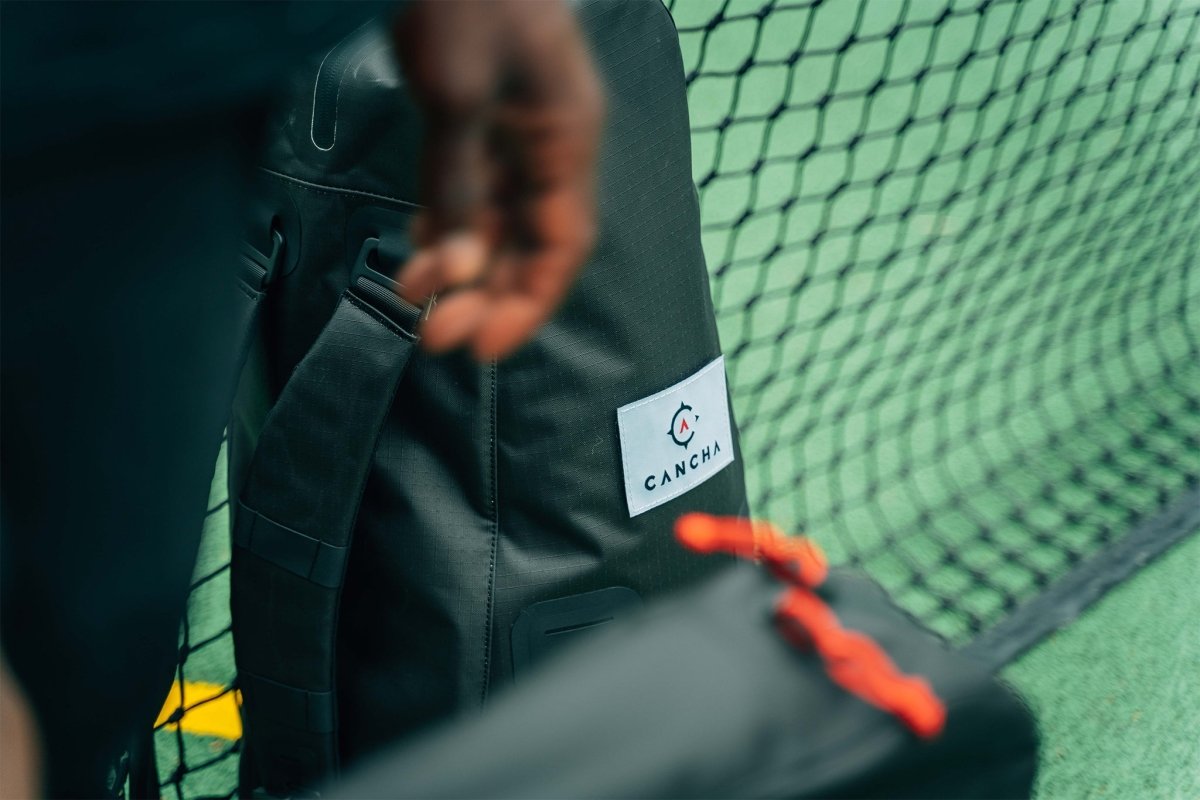
If you're choosing between a backpack and a dedicated tennis bag, here's the honest answer: most players don't need to choose anymore. The reason this debate existed for decades is that the two formats solved different problems — a racquet bag fit your racquets and a backpack fit your life. Modular hybrid bags collapsed the trade-off. Cancha built the All Court Backpack specifically because the either/or shouldn't exist.
That said, the right bag still depends on how often you play, how far you travel, and how much gear you actually move. Below is the comparison we wish someone had handed us when we started designing bags in 2019.
The Quick Answer
- Casual or recreational player, one racquet, weekly hit: a backpack is plenty. Look at the Original Racquet Bag (15L) at $139 — minimalist, one racquet, daily-carry footprint.
- Active club player, 2–3 sessions a week, mixes tennis with work or commute: a hybrid. The All Court Backpack ($249) holds 2 racquets, a 16″ laptop, a rain cover, and clips into the modular system. Rated 4.73★ across 308 verified reviews.
- Tournament player, frequent travel, 3+ racquets: a dedicated racquet bag built to travel. The Racquet Bag Voyager ($219) holds 3 racquets, fits as carry-on, and currently averages 4.78★ across 756 verified reviews.
- Touring player, 6+ racquets, multi-leg trips: the Racquet Bag Pro ($259). Built for the full season, not the weekend.

Backpack vs Tennis Bag vs Hybrid: A Direct Comparison
| Spec | Standard Backpack | Dedicated Tennis Bag | Modular Hybrid (e.g. All Court Backpack) |
|---|---|---|---|
| Racquet capacity | 0–1 (in a side pocket, awkwardly) | 3–12 racquets | 2–3 racquets, purpose-built compartment |
| Laptop fit | Yes | Rarely | Yes (up to 16″) |
| Carry-on compatible | Yes | Usually no | Yes — fits standard airline carry-on dimensions |
| Wet/dry separation | No | Sometimes | Yes (via Wet-Dry attachment) |
| Off-court use | Daily driver | Rarely | Designed for both |
| Modularity | None | Limited | Clip-on Day Bag, Wet-Dry, Sling, Pro Organizer |
| Typical price range | $50–$150 | $80–$280 | $219–$259 |
Choose a Backpack If…
You play casually — once a week, one racquet, no tournament travel. A standard backpack with a side strap for the racquet handle is enough. You'll save space, weight, and money. The trade-off: zero racquet protection, no shoe compartment, and you're sweating into the same pocket as your laptop.
If you're casual but want something that actually fits a racquet properly without becoming a tournament bag, the Original Racquet Bag (15L) is the cleanest answer: one racquet, day-bag footprint, lightweight enough for the commute, structured enough that your racquet isn't dangling off the side.
Choose a Dedicated Tennis Bag If…
You're a tournament player or carrying 4+ racquets routinely. You need thermal racquet protection, separate shoe space, and capacity for stringing tools, towels, water, and a change of clothes. A 12-racquet pro bag is overkill for most — but if you're playing competitively, a dedicated tennis bag earns its size.
The trade-off: most traditional racquet bags are useless off the court. They're branded for sponsorship visibility, not for the rest of your week. That's the gap modular hybrids close.
Choose a Modular Hybrid If… (and Why Most Players Should)
You play 2–3 times a week. You travel for tournaments occasionally. You also commute, work, gym, and travel like a normal human. You don't want a bag for each activity.
This is exactly why modular hybrids exist. The All Court Backpack holds 2 racquets, protects a 16″ laptop, has a built-in rain cover, and connects via Cancha's modular clip system — add a Wet-Dry Bag for sweaty kit, a Day Bag XL for travel days, or a Sling Bag for the essentials. One core bag, many configurations.
For touring players who want the same modularity but with a 3-racquet primary, the Racquet Bag Voyager is the equivalent on the racquet-bag side of the system.

What About Padel and Pickleball?
Same logic, smaller scale. A padel or pickleball racquet is shorter than a tennis racquet, so a dedicated bag is less necessary. The Everyday Mini ($99) is built for exactly this — short-court racquet sports plus daily carry — and replaces both a backpack and a small racquet bag for most players.
Frequently Asked Questions
What's the difference between a tennis backpack and a racquet bag?
A tennis backpack carries on your back like a normal pack but with a dedicated racquet compartment — typically 1–2 racquets. A dedicated racquet bag (sometimes called a thermal racquet bag) is carried by shoulder strap or handle, holds 3–12 racquets, and is built around the equipment, not the body. Hybrids like the All Court Backpack split the difference: backpack ergonomics, racquet bag capacity.
Can I carry a tennis bag as a plane carry-on?
Some yes, some no. Most pro-style 9–12 racquet thermal bags exceed standard carry-on dimensions (22 × 14 × 9 in on most U.S. carriers). The Racquet Bag Voyager, Racquet Bag Pro, and All Court Backpack are designed to fit standard carry-on size limits. For more on flying with tennis gear, see our flying with a tennis racket guide.
How many racquets do I really need to carry?
Recreational players: 1 (plus a backup if you string at low tensions and break strings often). Club-level competitive: 2. Tournament players: 3–4 minimum (strings break, tensions vary by conditions, you want options). Touring pros: 6+. Bag capacity should match your actual game, not your aspirational one.
Is a modular hybrid worth more than a basic backpack?
If you only ever use one bag for one purpose — probably not. If you've ever found yourself owning a tennis bag, a gym bag, a work backpack, and a travel daypack — that's the case for a modular system. One core bag plus clip-on attachments replaces three to four single-purpose bags. The math works in 6–12 months for most players.
What's the best Cancha bag for someone playing tennis, padel, and pickleball?
The All Court Backpack. It carries 2 racquets across any racquet sport (tennis, padel, pickleball), holds a 16″ laptop, and clips into the modular system. For padel or pickleball only — where racquets are shorter — the Everyday Mini is a more compact alternative at $99.
The Honest Conclusion
The backpack-vs-tennis-bag debate is a holdover from when bag design was lazy. If you only play occasionally, a backpack is fine. If you tour, a dedicated racquet bag earns its keep. For everyone in between — which is most players — a modular hybrid is the bag you'd actually choose if you started from scratch. Spec for spec, that's why we built ours.
Browse the full system: Court Bags · Modular Attachments · Bundles.
Read more
A practical guide for university student athletes — the bag setup that handles a full academic day plus practice, without buying separate bags for each.

Joe Delagrave's life changed in a single moment in 2004. What followed — Paralympic medals, mental rebuild, and a perspective on sport that re-reads everything we thought we knew — is the conversat...


Leave a comment
All comments are moderated before being published.
This site is protected by hCaptcha and the hCaptcha Privacy Policy and Terms of Service apply.